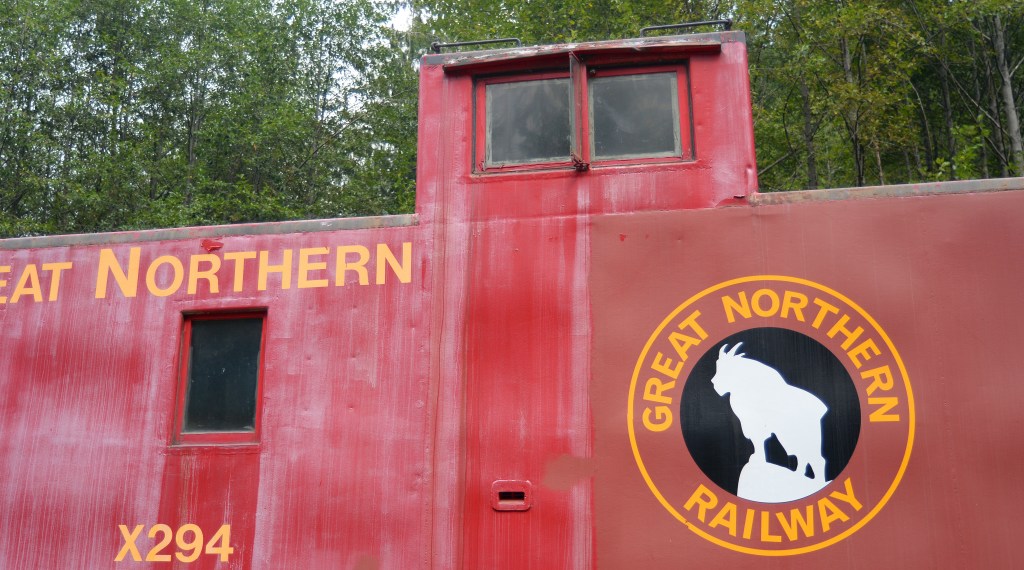
DEAD MAN’S SLIDE AND THE WELLINGTON AVALANCHE DISASTER
Not every poem in this section represents an invented form or loose variant. Research may also be applied in a more traditional sense—augmenting narrative architecture rather than exploring exotic lexical profiles. In Dead Man’s Slide, we encounter a relatively straightforward three-part English sonnet cycle commemorating a historic event, inspired entirely by a visit to the site of the Wellington avalanche disaster deep in the Cascades. The day trip, sponsored by Atlas Obscura, proved both physically and spiritually demanding (the latter I will explain further on), as the site required a strenuous hike several hours into the mountains. The infamous snow sheds—massive concrete defensive structures constructed by the Great Northern Railway to shield passing trains from the region’s violent winter avalanches—were presented to the group as the principal attraction. What began as an almost prosaic exploration of turn-of-the-century ruins gradually assumed a darker tenor, punctuated, as advertised, by the strange and isolated remains scattered across the mountainside.
These structures were built in response to one of the deadliest avalanche disasters in American railroad history. In late February 1910, after more than a week of relentless snowfall in the Cascade Mountains, two Great Northern trains—the Seattle Express and the Spokane Local—were stranded near the small railroad settlement of Wellington, Washington. Snowdrifts blocked the line, immobilizing the cars on an exposed stretch of track beneath Windy Mountain. Railway crews and passengers waited for conditions to improve, unaware that the unstable snowpack above them was steadily accumulating lethal pressure.
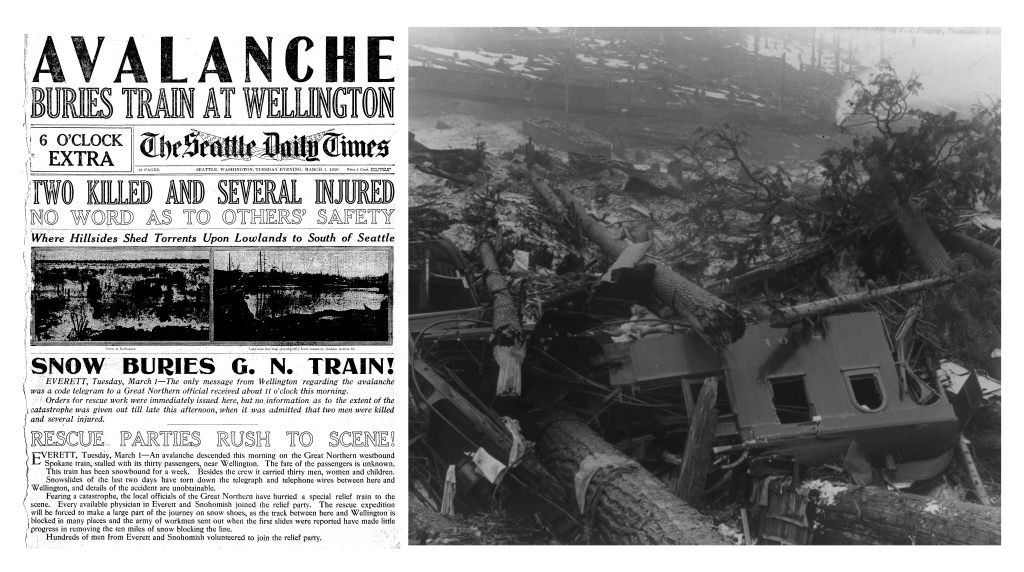
In the early hours of March 1, a massive avalanche broke loose. A wall of snow and ice swept down the mountainside, carrying with it timber, rock, and debris. The force of the slide hurled locomotives and passenger cars hundreds of feet into the forested ravine below, crushing wooden structures, severing the tracks, and burying the wreckage beneath tons of compacted snow. Ninety-six people were killed—railroad workers, travelers, and residents of the settlement—making the catastrophe one of the most devastating winter disasters in the Pacific Northwest. Rescue efforts were slow and perilous. Survivors and recovery crews labored in freezing conditions, cutting through twisted iron and frozen drifts by lantern light, often forced to suspend their work when new slides threatened the site. Bodies were recovered over days and weeks and transported down the mountain by sled. In the aftermath, the railway expanded and reinforced its system of snow sheds along the line, enclosing long sections of track beneath heavy protective galleries designed to deflect or absorb future avalanches. Many of the concrete foundations and fragmented walls encountered along the Iron Goat Trail today are the remains of those defensive works—somber engineering responses to a landscape capable of sudden and catastrophic violence.
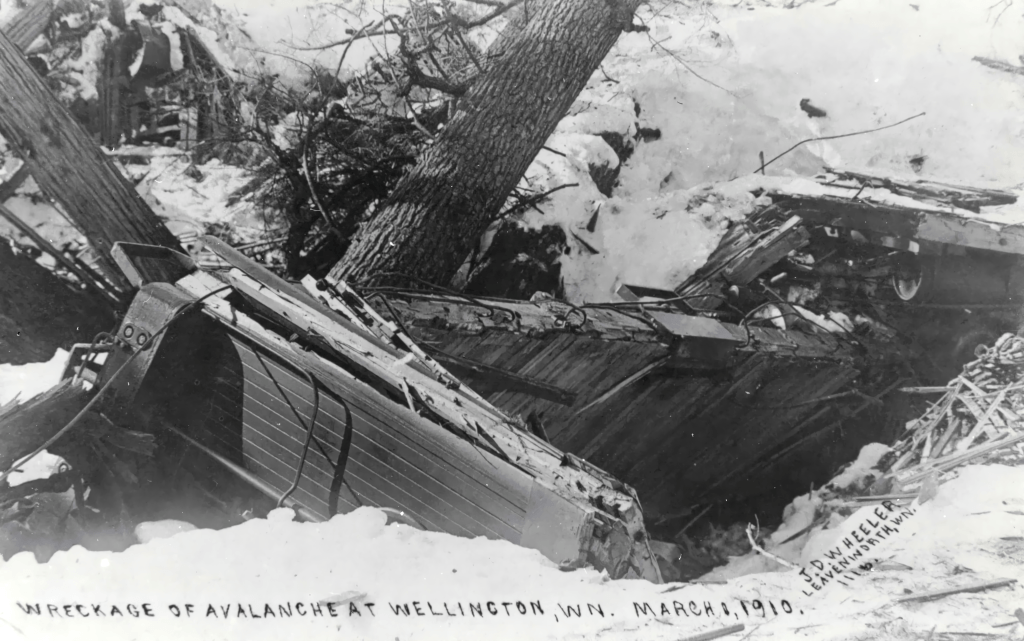
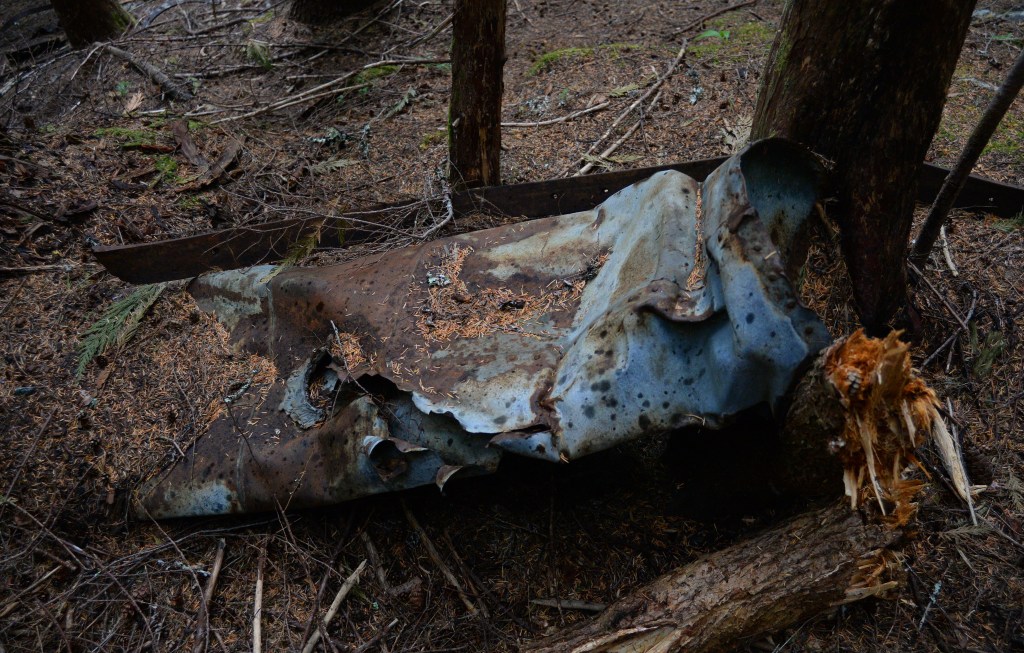
Descending into the site makes the scale of that catastrophe legible in ways no archival account can fully convey. By means of fixed safety cables—similar to the kusari chains used on difficult approaches on Mount Fuji—we worked our way down the steep ravine toward the remaining wreckage of the Great Northern passenger train buried by the slide. At the bottom, a memorial plaque commemorates the ninety-six lives lost on that fateful morning in 1910, transforming what first appeared an exercise in historical curiosity into an encounter with a landscape still charged with consequence.
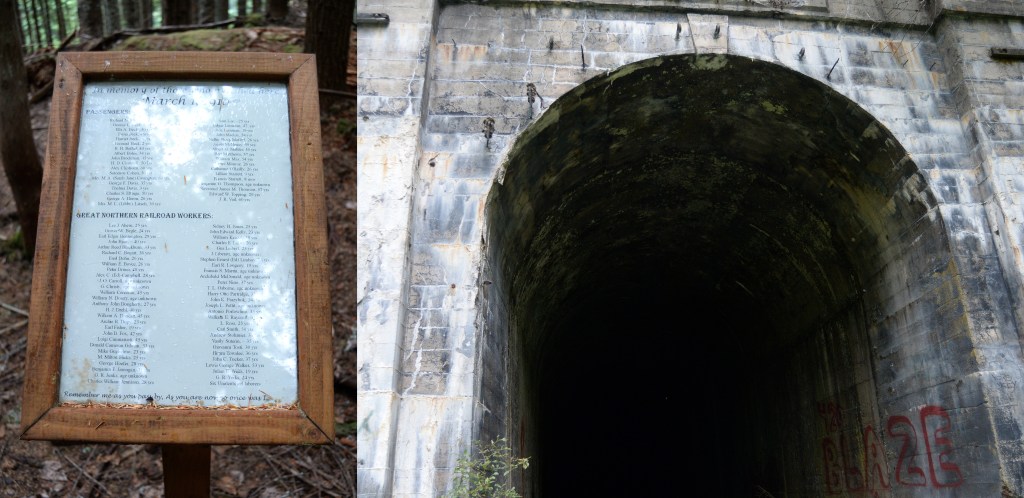
The resulting poem was originally far heavier on exposition, reconstructing the disaster more dispassionately as reportage and tracing the order of events that led to the recovery of the bodies and the attending of the dead. Yet the turn was always there, distributed across the three sonnets as though they were quatrains; the final poem is therefore the turn writ large. This is often the advantage of the cycle: rather than forcing each sonnet to pivot independently, the architecture allows a single reorientation to gather force across multiple chambers. The poem’s research was twofold: immediate, physical encounter with the site, followed by later archival and historical reading. At face value, Dead Man’s Slide concerns the avalanche that destroyed the Great Northern train at Wellington, along with the doomed settlement itself. The facts are dramatic enough that my earliest draft risked reading as mere reportage, as though the weight of the historical record foreclosed any claim to a personal reading of it.
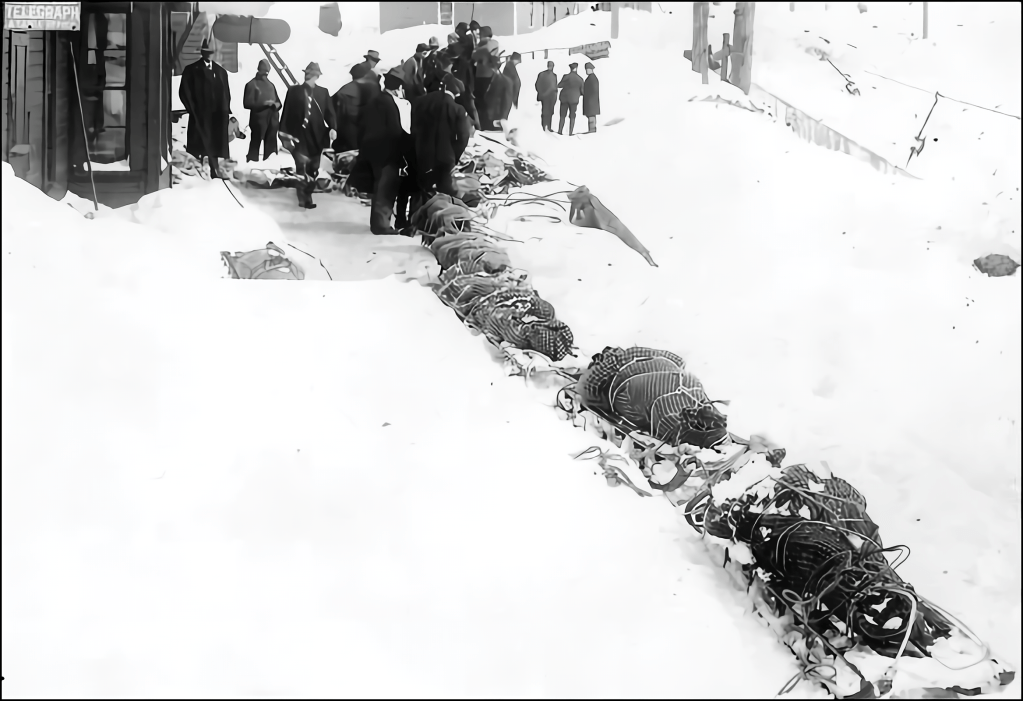
Accumulated detail has a way of displacing the poem’s emotional center—the researcher’s conscientiousness overwhelming the writer’s instinct. What compelled me to write was not only the event’s historical weight, but the experience of moving through the surviving snow sheds, tunnel, wreckage, and memorial ground near the river’s edge. As with certain other poems written in response to place, I began from immediate impression and only later supplemented the work with documentary particulars. Dead Man’s Slide is an admixture of both methods: extemporizing the framework at the site, then refining it through later research into the names, testimonies, and stranger surviving details omitted by the commemorative plaque. The catastrophe was always material for something the poem needed to reach beyond it. By the turn, the historical material has been made to support deeper personal themes: the emotional wreckage of a relationship that could not be honorably resolved, commingled with the combined grief of having lost five significant friends and family members in the span of one year.
That private pressure was bound up with the excursion itself, though I understood this only imperfectly at the time. What had seemed a historical outing later acquired a second, more intimate charge, and the final movement grows from that retrospective recognition. The avalanche remains the poem’s literal subject, but by the third sonnet it has become a figure for misalignment, for desire complicated by conscience, and for the terrible fact that one may arrive too late to innocence but still too early for speech. Much of the original reportage was therefore stripped away; a few names and details remain, but the poem now depends on formal pressure to carry what documentary accumulation could not say directly, and what had once been competent historical verse became, through structure, a poem with a deeper and more divided allegiance.Dead Man's Slide I. In nineteen-ten they woke to thunderlight at Windy Mountain. Snow sheared from its shelf, fell like a body from a great height, took Bailets Hotel, took the track itself, took cars and men and mailbags in its run and drove them through the dark into the trees. The Spokane Local was torn apart, undone. The sun rose on a valley filled with wrecked degrees of iron: boilers split, pistons bent, sandpipes cinched tight around the standing pines. They counted ninety-six dead from the rent of snow and steel, laid them along the lines, and sent them down on sleds. The mountain held the rest; the river held what bled and cooled.
II.
Two lawyers jumped from Twenty-Five and lived.
They slid the switchbacks under Cascade Tunnel,
came down end over end and rose half-given
to breathe again. Below them lay the funnel
of dark and quiet—Jesseph, Merritt, snow
packed in their cuffs. A whiskey flask went round,
the proof passed hand to hand. Yet just below,
they found Ms. Starret pinned where branches wound
her to the wreck. Her infant lay beneath
her breast, the crying gone. Another son
they cut free living, blood along his teeth,
a stick drawn from his head. The work was done
by lantern light. The snow came down anew
and covered what the night let through.
  III.
You brought me here among the dead,
among the names fixed at the rim—
a nurse, a child, a writer gone to bed.
You knew what weight I'd carry in.
The wire burns between my hands, above
the cliff where alder closes over ruin.
What did you want? I bring you nothing of
the relic kind—no leaf from Bhutan,
no cuspid from Siddhartha's mouth, nor canine
splinters lifted from the rood of Calvary—
I only cede the ice-tipped thorns of Whitebark pine,
the ash of our own catastrophes
shook from the severed veil
and scattered along the Iron Goat Trail.
The process of writing the poem—and researching the event through materials from the Library of Congress as well as various documentary sources—has now come full circle, returning me to my primary practice: filmmaking. I am currently developing an animated short, tentatively titled Wellington, which extracts one salient thread from the poem—the presence of the deceased children. This will not be a literal adaptation or narrated version of the poem, but rather a tone piece in which a hunter encounters what he believes to be a young girl in the Cascades. She shapeshifts between a bear, an elk, and a raven, each animal leading him incrementally closer to the crash site and, ultimately, to her grave.
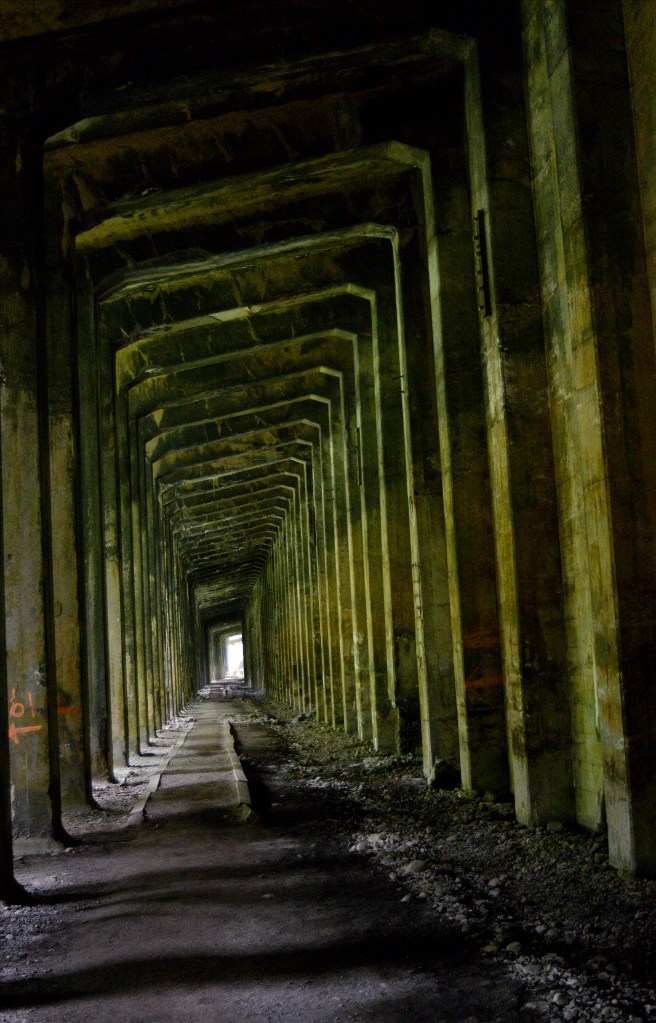
Along the way, he seeks refuge from a blizzard inside one of the abandoned snow sheds, where he builds a fire and falls into a dream. In this dream, the avalanche and train disaster reappear not as historical reconstruction but as a symbolic fantasia—an oneiric sequence of images blending documentary reality with a hyper-stylized landscape of memory and dread. The snow shed interior, photographed during the same excursion, provided the film’s central architectural image.
As the animated stills below suggest (offered here only as a small sampling), I have carried forward the idea of the container or armature that governs the poem’s structure, now exploring how similar frameworks can also organize and compress moving forms.
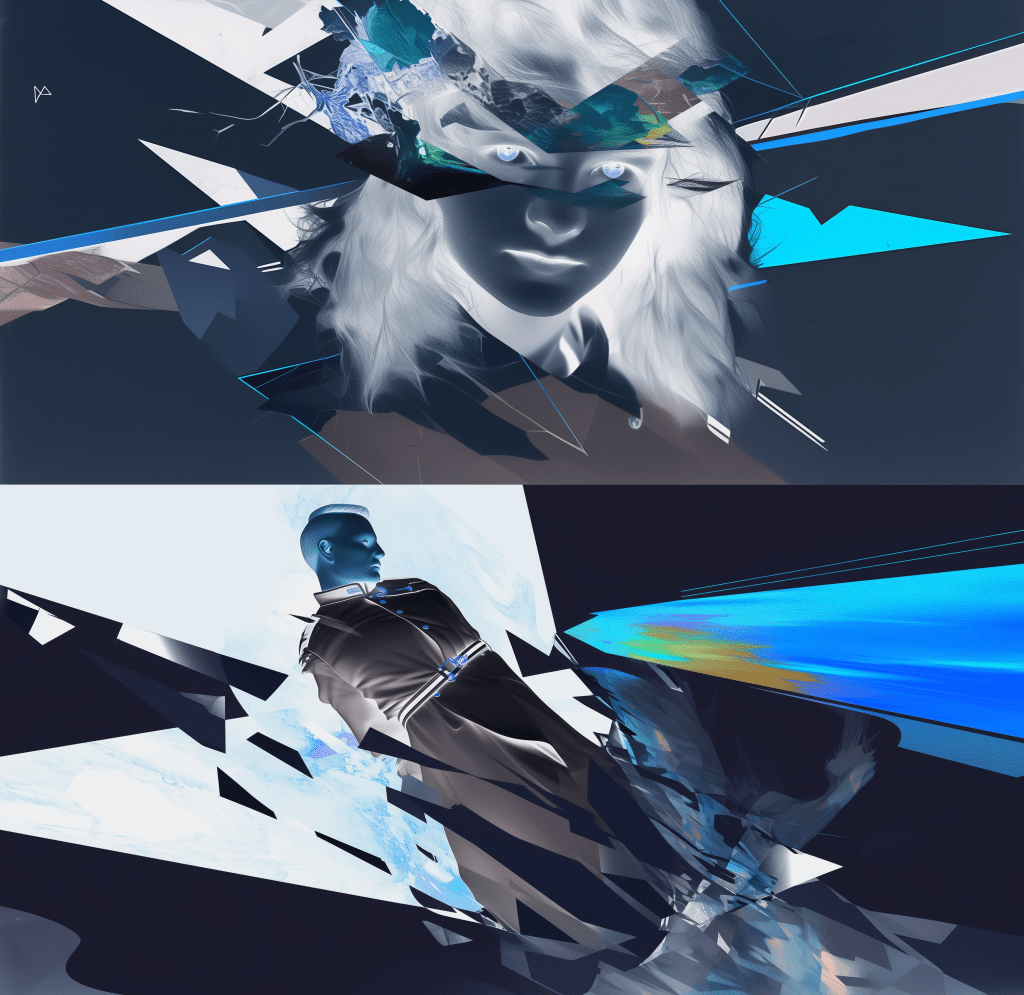
The research that produced the poem and the research that is now producing the film share the same governing logic: a structural armature, whether in verse or in moving image, shapes and contains time the same way a snow shed contains a mountain—by anticipating the force that would otherwise scatter everything it protects.

