A Primate’s Progress


A PRIMATE'S PROGRESSa.jpg


“Delivered under the similitude of a dream, wherein is discovered the manner of his setting out, his dangerous journey, and safe arrival at the desired country.”

–John Bunyan

I. Solitary Refinement

At the hour of second sight, he scrawls

two marks—one holy, one erratic—

an incantation on his office wall,

like the sympathetic magic

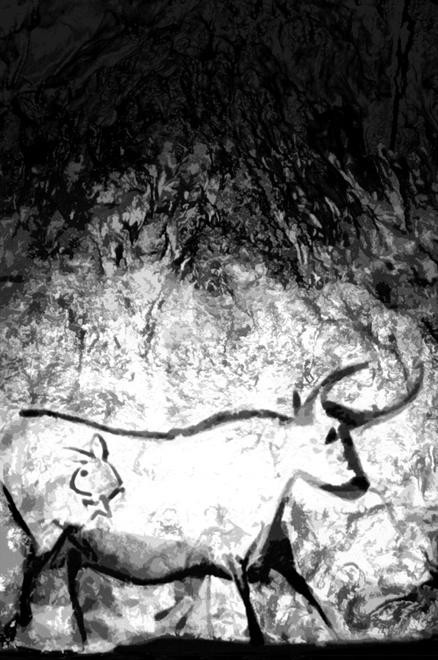
of his primordial kin—whose curves

of ochre bison, hunters, horses,

the French so lovingly preserved.

He’ll be half-blind like them, forced

to squint while scribbling in the faintest light

where shadows move like feral beasts—

he’ll press his fingers to his eyes

to prove he actually exists, to cleave

the borders of his prison cell

in every hollow of his skull.

II. Horror Vacuui

The noble savage is a mythic lark,

yet proves no less compelling.

How then does man outwit the dark

without putting out his eyes, or sailing

heedlessly toward the burning sun?

Must he lash himself—and his brother—

to a rattling chariot, and run

to death beside him for their mother’s

madness? His choices are more limited

than tracing filament through a maze.

Perhaps the ‘enlightened’ primitive

will cry into that boundless cave,

only to hear voices beyond the room,

echoing deeper into the vacuum.

III. The Persistence of Division

But then the office space grows dim,

the only light, his thoughts—refracted through

his bourbon, ice, and the tumbler’s rim—

a film unspooling out of view:

his final moments drawing near;

a flicker caught between this world and that;

a blurred frame for each passing year—

now ending on this faded photograph:

He’d always thought his wife had smiled

a bit obliquely for a bourgeois girl,

sunning on that imperial virgin isle

by a native decked in costume pearls

strung from his belly to his nose.

He gave her horns—the native, a halo.

Cocktail Napkin Colloquies


AMERICAN POETSa.jpg

I. American Jeremiad

“I love a martini, two at the most. Three – I’m under the table; four, I’m under the host.”

 – Dorothy Parker

(The Algonquin Hotel, 1929)

Shakespeare is dutifully remembered

for his plaintive sonnets and perfect plays.

We are ruined by his genius, forever

at a loss to be adequately pained.

Today, we are on the opposite side

of Elizabethan diction; we brood

in prosaic tones and truncated lines,

we cheer blandness and raise brandy balloons

to Sandburg, Hemingway, Williams, and Frost,

those cryptic purveyors of emptiness

who’ve dulled the edges of our lips and thoughts.

Should we remix their drinks, I would request

this recipe: a splash of Whitman’s Dick,

& a dash of Emily Dickinson’s Wit.

II. Pre Profundis: The Ballad of Hyacinthus and Marsyas

“Those whom the gods love grow young.”

 – Oscar Wilde

(Cadogan Hotel, April 5, 1895)

How I hate that unfathomable boy,

who pretended to love me in the guise

of a man! He has robbed me of all joy,

my good name, and my fortune with his lies.

And yet, he was a celestial body

devouring light, bending me to his will:

I was wittingly drawn to the dark rings

of that moon, the circumference of my hell.

Now gilded snakes pervade my dreams; they slip

with cool abandon down my bed to sleep

and brush the trembling reaches of my lips.

Nysaeans—why have you forsaken me?

For Apollo kissed that indolent youth,

then flayed my skin for blowing on a flute.

III. The Idea of Disorder at Key West

“By God, I wish I had that Hemingway here right now! I’d knock him out with a single punch!”

– Wallace Stevens

(Casa Marina, 1935)

Oh! Blessed rage for order—pale Ramón!

Papa is a friend of Dionysus,

as are we—let us tip our hats to him,

as well our cups: to the Bull of Minos

on this isle of bones, who sloshes about

its shallow reefs! I give this humble toast

to dull his roar beyond our pink redoubt

which mists the trawlers idling on the coast

and drapes their empty decks with silver foam.

Let us conspire to lure him with a string

of hyacinths beside his water hole,

that stretch from our veranda to the sea.

I’ll don my mask, you tune your pithy lyre:

the Maenads fan their cocktails by the fire.

IV. Delirium Tremens

“A straw hat on, my eyes flushed, might I resemble the former

preacher who painted a pool table and then maimed himself?”

– Rush Rankin

(Descanso Beach Club)

The seaweed bends with the ocean, a field of women

kneeling, then standing row upon row, as if to offer

a benediction to the shore. Already I forget I am

floating in this frigid Catalina water,

not some ghost surveying southern France—

nor an ominous crow or a half-mad painter

scanning a landscape after a pint of absinthe—

A boat circles above me, the black chain from its anchor

stretches like an umbilical cord to the blanched florets

of coral below. The motor hums. A large woman peers

over the side as I ascend, her distorted contours

growing in and out of focus—and I am free,

more so than Van Gogh waking in Saint Rémy,

a dark habit caressing his cheek.

V. Dionysus Spikes the Ball

“Teenage boys, goaded by their surging hormones, run in packs like the primal horde.”

– Camille Paglia

(Caribbean coast of Mexico)

The mermaids swing their bodies beach
to beach—like skipping stones that never sink;
they don’t suspect how far the rip tides reach
or how the sea is seething as they drink.
The Marquis purrs when hipbones slap the waves—
a gasp, a jolt, a laugh that could seduce;
Camus would note a stranger learns to crave
the shine of sweat that justifies abuse.
The boys—like oiled gods in mirrored shades—
strike statues in the surf, each sweaty boast:
a promise made of flesh the sun remakes;
Dionysus leaps and hammers down the post.
Those hips, that heat, that final feral act:
a scholar licks the salt off every fact.

VI. Shiduri’s by the Sea

 “Beside the sea she lives, the woman of the vine, the maker of wine.”

–Shin-eqi-unninni

My tavern is exclusive and discreet,

the customers irregular at times;

some drink from flasks of lapis lazuli

while others tip bejeweled carafes of wine.

Above the bar I dedicate a frame

to every famous patron I have served—

that’s Ea on the left, a tortured mage,

who drowned his sorrows when he drowned the Earth.

The Stone Men used to come on Saturday

to numb their week of service on the ship—

they were a stoic lot, but always paid

until one client smashed them all to bits.

He said his name was Gilgamesh, I think—

he crushed the pink umbrella in his drink.


Territory


His embrace may be construed as an act,

his handshake a shill, his smile on the edge

of aggression: a wolf marking his path

will flash his teeth and pat men on the back

to sniff the vapors of his rival’s breath.

His embrace may be construed as an act

of kindness to the novice eye, his tact

a slight of hand to mask the silhouette

of aggression. A wolf marking his path

will scan the party’s aftermath,

the room refracted in his green coupette.

His embrace may be construed as an act

of ownership, circumscribed by a trap

for a passing skirt, which is the secret

of aggression: a wolf marking his path

will circle every option (then fall back

to catalogue the pearls around a neck).

His embrace may be construed as an act

of aggression, a wolf marking his path.


The Demon Life


“I hunted the shadows, disdaining thy true love.”

 –Tom Rakewell


There are no wolves, neither shrewd nor recondite,

who would venture to touch her willfully

in the places she left exposed to the light.

It wasn’t a sin, there were no wages— she

hid the wounds beneath her skin, a pale hue

that appeared as dappled sunlight on her face.

Bitter men visit to remember their youth,

in this bed where her body never ages,

preserved in the mirror on the vanity.

The only indiscretion is the silence

in the room, the sheets now gathered at her feet.

You see, she wants to speak. Speak then,

we’re listening, intently as gentlemen

and devils may, all horns and motivation.


Your ego keeps you awake at night, it

never sleeps, even when the body sleeps,

it angles over images and purrs,

incurious to deeper scrutiny,

whether vacant or in bloom—it demurs,

licking at your face at noon, as welcome

as a shriek that deadens in the middle

of a crowded room, or a suspicion

you shove to the back where pithy women

congregate to drink—they ogle you,

they know their lonely hearts on the wall

are somehow your fault (though you are obtuse,

basking like a cat on the window sill—

inert, an overheated ingénue,

still able to fool a critic or two).

“Forgive my Baroque sensibility…” (I said

at some fish-and-goose soirée) “…but I bet

your alabaster skin could sway a priest

into bed—though it breaks down, all of it,

eventually: this punch, this pickled beef,

that loud mongrel on the rug by the door

ripping the tassels with his teeth.” She winced

then turned to retrieve her hat from the floor—

and as she ascended the steps, I glimpsed

beneath her twirling dress a galaxy

spiraling about a white core. My heart

kept time with the thumping on the ceiling

after that– some drunk promoting his art

by fucking blindly in the dark, without

any Elizabethan caveats.


A Snake’s Progress

My love, it is a skein, a sheet drawn taught

from my elbows to my feet. We pretend

we are resilient until we are caught,

then uncover the cheeky truth: women

want and want. There’s a voice that hammers through,

an incessant beating upon the door,

that dire need for You. I tremble, I do.

Yet I would rather defer to a whore

who leaves her intentions on the divan,

who prefers to romp with the Casual Wit

than to chat with a Pious Bore in vain.

I want, too, or shall I deign to submit

I wantonly need. The rules of the game

are set, and there’s nothing more to explain.


The Snake Eating Its Own Tale

I finally see that whether my actions

are noble or immoral, the end result

is my spiritual death. I am far too prudent

and shrewd to allow myself to be hopeful.

This is a strange and terrifying proof:

to love you is to hate myself. A judgment

written in the margins will not change this truth,

it is a tautological sentiment,

a garden variety uroborous

hidden in an a priori argument:

in choosing you, I have given up my choice.

There’s nothing left for me to do, other than

to stop analyzing what I already

know to be true, or simply to stop breathing.


Poetry Will Suffice

Poetry will suffice. There is nothing

more oddly cogent than a formal verse

(other than silence, which has more beauty).

When your friends have damned your iniquities

to hell, and turned their backs to you in turn,

poetry will suffice. There is nothing

like a villanelle to assuage pity

(or bare your rage, if that’s what you prefer,

other than silence). Which has more beauty

of the two: a dandy agonizing

over a dead word– or: a woman’s curves?

Poetry will suffice. There is nothing

in the known universe or the third ring

that has greater efficacy to burn

(other than silence, which has more beauty).

When loneliness makes the uneasy peace

a guilty man might steadily endure,

poetry will suffice. There is nothing,

other than silence, which has more beauty.

Annus Horribilus


ANNUS HORRIBILUSa.jpg


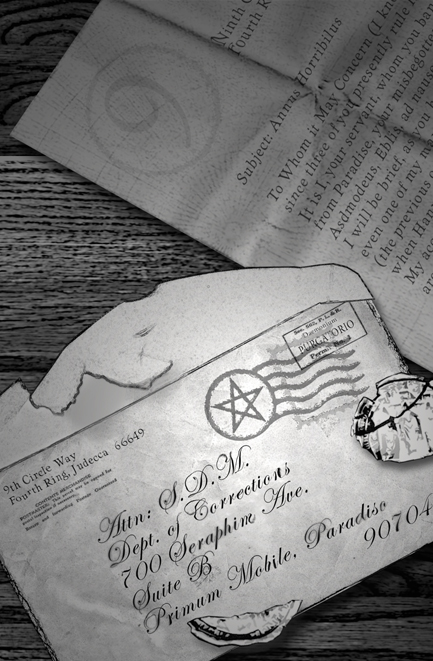
To Whom it May Concern (I know not which,

since three of you presently rule Heaven):

It is I, your servant, whom you banished

from Paradise, your misbegotten son,

Asmodeus, Eblis, et cetera;

I will be brief, as you have not answered

even one of my many short dicta

(the last letter having been delivered

when Hannibal thundered across the Alps).

My icy quarters in the fourth ring

grow colder nightly, owing to your help,

which makes it more than difficult to bring

my varied concerns to your attention—

so for once, I implore you to listen. 

Charon is derelict in his duties–

he sleeps on the banks of the Acheron

when he imagines no one is looking.

Cerberus is old and often prone

to taking long naps (and one of his heads

is not functioning, or so I’ve heard).

At Hell’s entrance, we’ve run out of hornets,

and the Titans flatly refuse to guard

the ninth circle until they are paid.

Also, the river of blood has congealed

and the great wall of Dis is in a state

of disrepair. I must also appeal

to your mercy, for I have bursitis

from standing so long in Lake Cocytus.

To wit, I am feeling a bit restless

and must remind you of my position.

I have been working this thankless business

forever: I deflowered the gardens

of Eden and Gethsemane, then paved

the Way of Sorrow; I drove Nero mad

until he joyfully set Rome ablaze;

I gifted the legions their zeal for blood,

then sealed the zealots’ fate at Masada;

with but a breath, I unleashed the Plague;

and I honed every skill of Torquemada,

the most inventive friar in Spain.

While my curriculum vitae is vast,

I’ve saved this point of contention for last:

It was I, not you, who caused the Great Flood.

My crowning achievement was cleverly

struck from those ledgers written in blood,

kept in your Celestial Registry.

I demand, forthwith, you address this error —

before the next millennium begins.

Otherwise, I may contrive some terror

hitherto spared from the annals of men.

Unfairly, the living in their naiveté

credit your hand for their misery

each time I mount a calamitous display —

yet I get saddled with Sloth, Wrath, Envy,

Pride, Avarice — and other trifles

your acolytes inscribed in the Bible.

But I digress. The soul that you sent down—

along with that surly shade, Virgil—

was civil enough, and so, I found

a serviceable courier for this epistle

and granted him safe passage to that end.

While we prefer to torture the guilty,

not those hell-bent on their own ruin,

we will receive him back accordingly,

for there’s always a home for the willing

in the hallowed, if not broken, circles

which you mysteriously built for me—

and since we’re shorthanded, his clerical skills

could save us from eons of paperwork.

Yours in all Perdition — Lucifer.